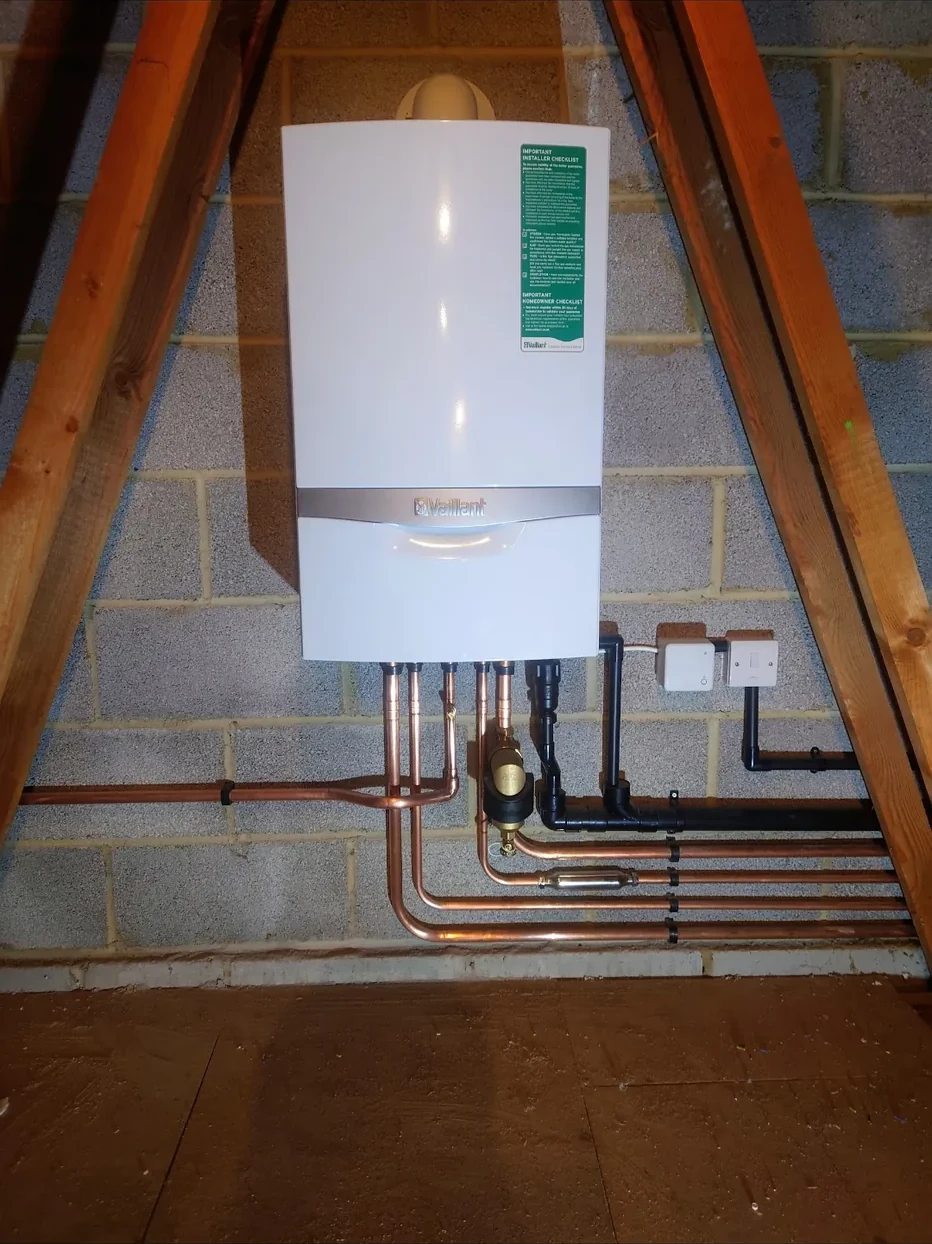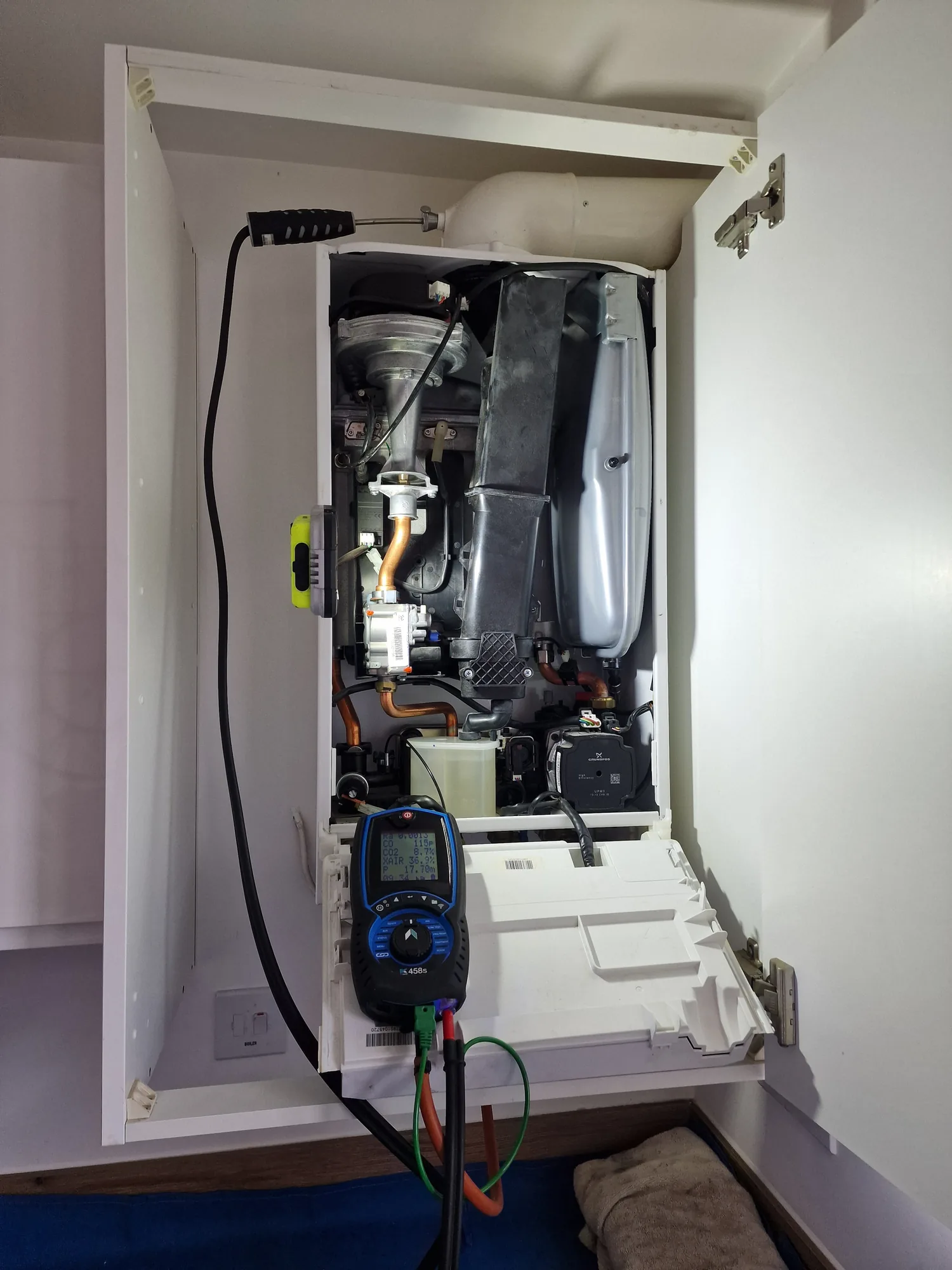
I am Brad from FireFlow Heating & Cooling, and a power flush is one of those jobs most homeowners have heard of but never really understood. If your radiators are slow to heat, some parts stay cold, or your boiler is making odd noises, there is a very good chance sludge has built up inside the system. A power flush clears it out and gets everything running properly again. Here is what actually happens during one, when it is worth doing, and a recent job I did on a ground source heat pump system that made a real difference.
What a Power Flush Actually Is
Every wet central heating system slowly builds up sludge and debris over the years. It is a mix of magnetite (black iron oxide from the inside of the radiators and pipework), general debris and, in hard water areas, some limescale. It collects at the low points of the system, coats the inside of the radiators and can clog up the boiler heat exchanger.
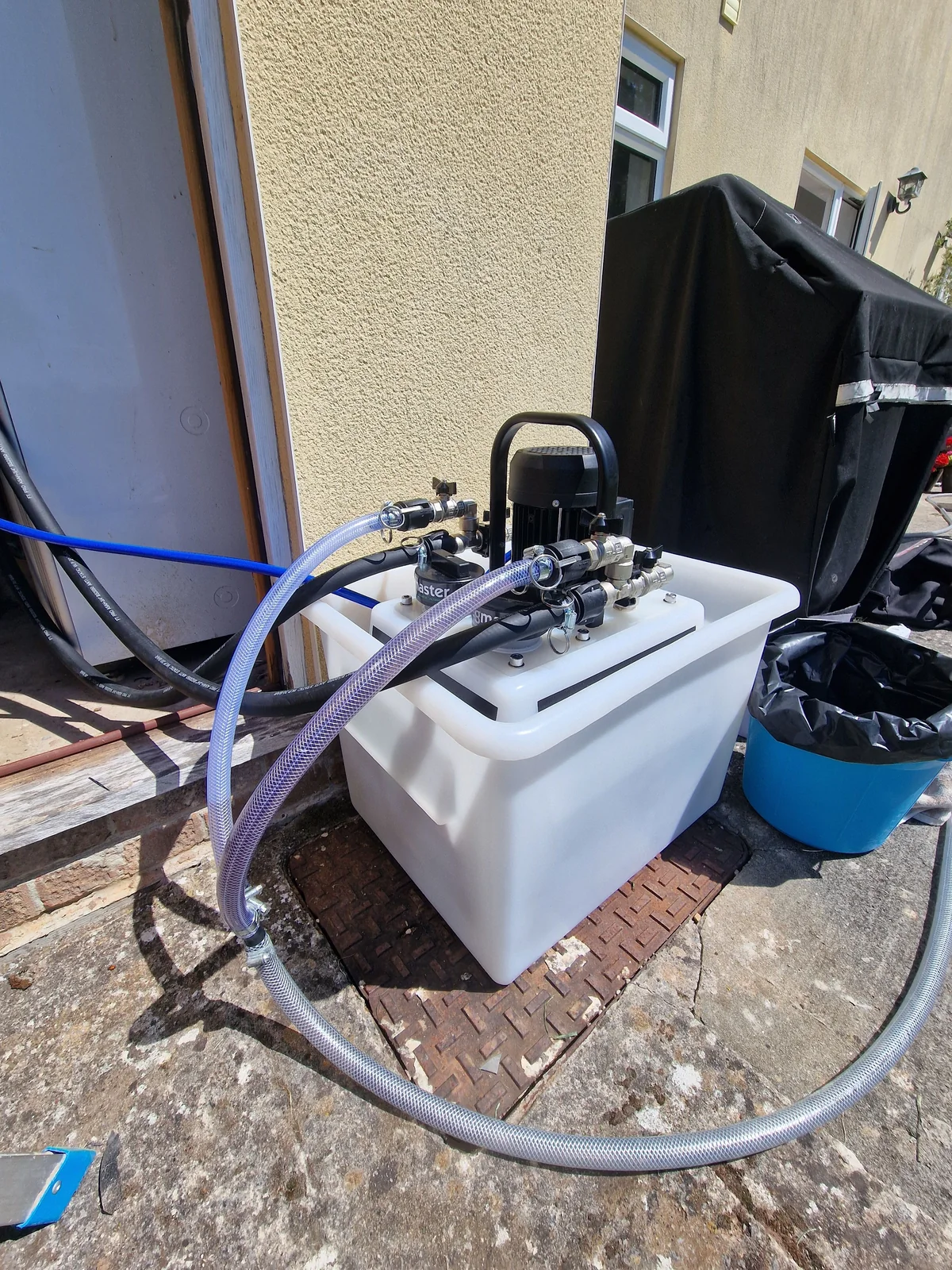
A power flush uses a pump connected to the heating system to push a strong cleaner through every radiator and the boiler heat exchanger at high flow. That, along with the cleaner breaking the sludge down, lifts everything out and dumps it into a waste container. The system is then refilled with clean water, dosed with fresh inhibitor to protect against future corrosion, and rebalanced.
Signs Your System Needs One
- Cold spots on radiators. Especially the bottom, or one side being warmer than the other. Sludge sits at the bottom and stops the water flowing through evenly.
- Radiators slow to heat up. If it takes ages for the room to warm up after the heating comes on, the system is fighting through restriction.
- Some radiators not heating at all. A radiator that is completely cold when others are on is often a sign of a bad blockage.
- Boiler noises. Kettling, banging or rumbling from the boiler often means sludge in the heat exchanger.
- Discoloured water when you bleed a radiator. Clear or slightly rusty water is fine. Thick black water is sludge.
- The magnetic filter fills up fast. If your system has a magnetic filter and it is packed with black gunk at every service, the wider system needs a proper clean.
How I Carry a Power Flush Out
- System inspection first. I check flow and return temperatures at every radiator and take a look at the boiler to see how bad the sludge is and where the worst spots are. Sometimes a chemical clean and a good magnetic filter is enough, other times a full flush is the right call.
- Isolate the boiler and connect the pump. The flush pump connects into the system through the pump head or at a suitable point in the pipework, so the flow is going through the whole system, not just around the boiler.
- Cleaner in and circulate. A proper heating system cleaner goes in and I run it around the system to break the sludge down. Each radiator gets isolated and worked one at a time so the flush is really pushing through it.
- Flush to waste. The dirty water goes out to a waste container, clean water comes in, and I keep going until the water running out is clean. On a bad system you can pull litres of black sludge out.
- Clean the magnetic filter. If there is one on the system I strip it and clean it so it is ready to catch anything that comes loose later.
- Refill and dose with inhibitor. Fresh clean water goes in, the correct dose of inhibitor is added to protect against future corrosion, and I rebalance the radiators so they heat evenly.
- Final checks. System pressure, boiler running quietly, all radiators warm from top to bottom.
Radiators Not Heating Properly?
Get in touch and I will take a look. A proper power flush from FireFlow gets your system back to full flow and protects the boiler for years. Covering Bridgwater, Burnham-on-Sea, North Petherton, Taunton, Wellington and the surrounding Somerset area.
Get a Free QuoteA Recent Job: Ground Source Heat Pumps
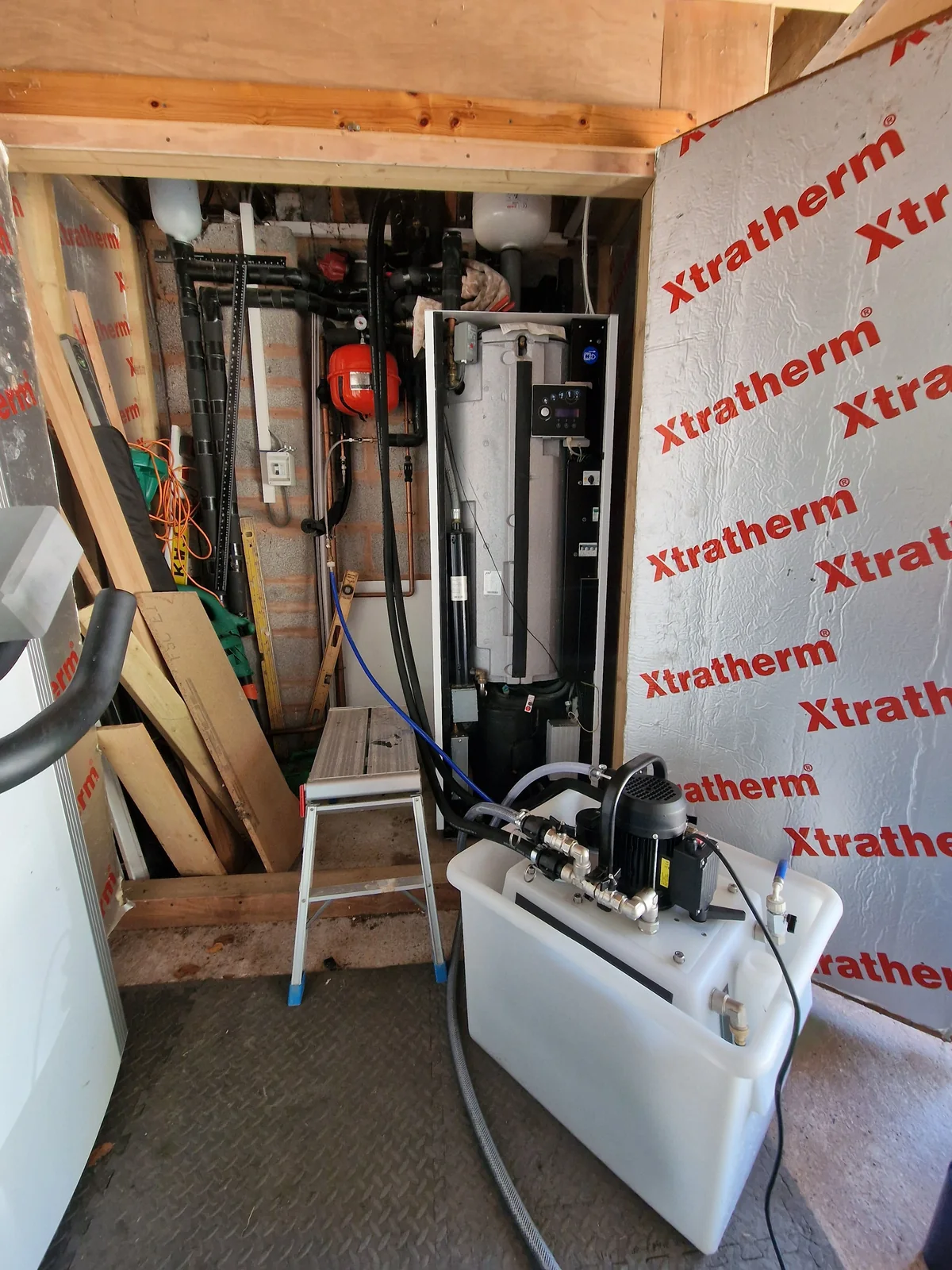
A customer got in touch through Google after their annual service. They have two ground source heat pumps running the heating, and during the service they had been told the system needed a proper power flush because of heavy sludge contamination. Heat pumps are much more sensitive to restriction than a traditional gas boiler is, so any sludge in the system hits performance and running cost fast.
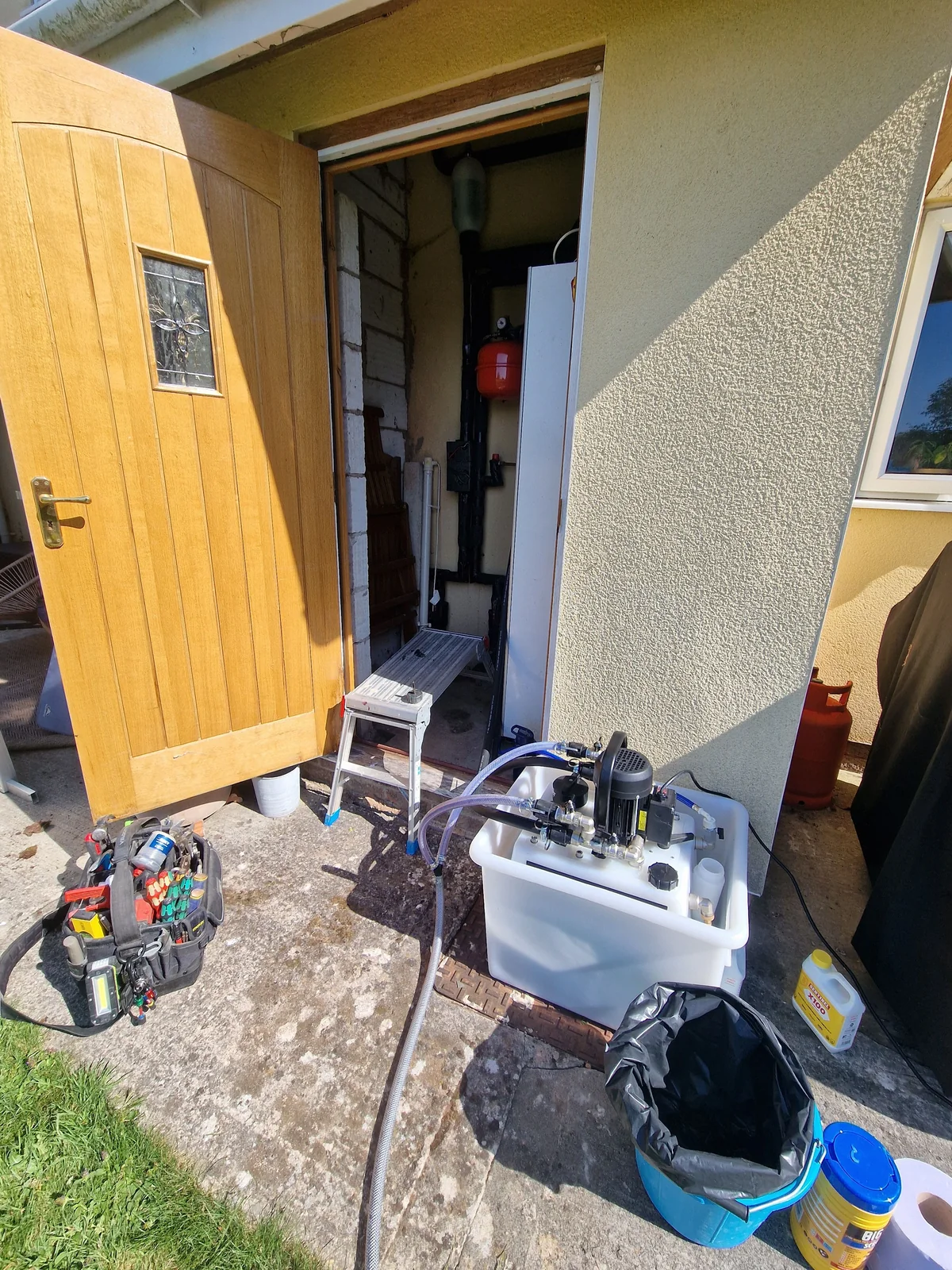
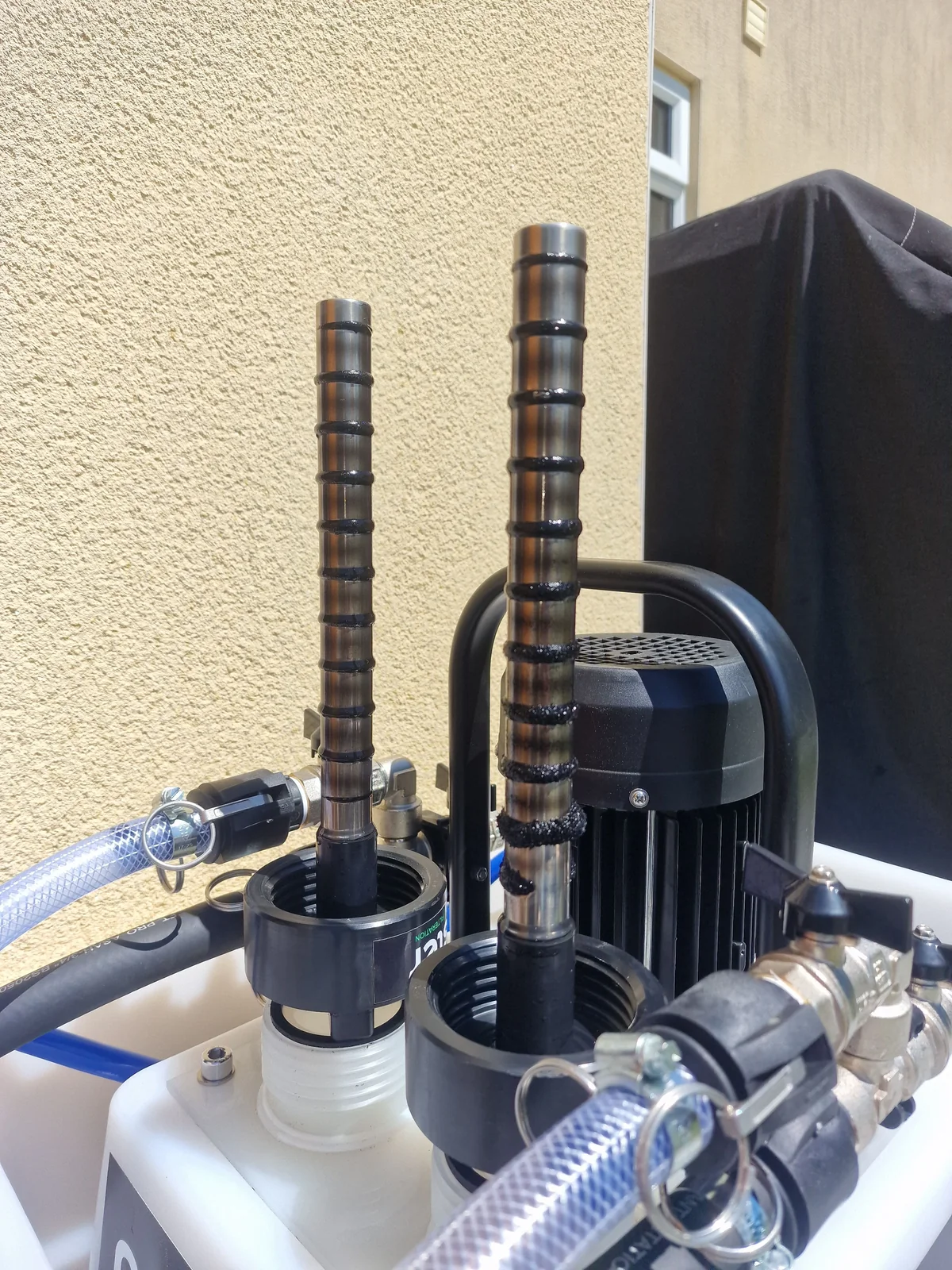
I went out and confirmed what the service engineer had flagged. The system was pushing years of magnetite around and both circuits were struggling. I set the flush rig up outside, ran hoses in to the plant room, and worked through the whole system radiator by radiator. Once everything was running clear I dosed the system with fresh inhibitor and rebalanced the radiators.
The result was much better circulation, the heat pumps running quieter and more efficiently, and a system that will not eat itself over the winter. This is exactly the kind of job that pays for itself many times over in running costs and by protecting expensive kit from early failure.
What It Costs
A power flush is priced per job because it depends on how big the system is and how many radiators it has. I will always come out, take a proper look at what you have, and quote you a clear fixed price before anything starts, so there are no surprises.
Put it next to the cost of a new boiler that has failed early because of sludge in the heat exchanger, or a heat pump running at half efficiency all winter, and a one-off power flush is very cheap protection.
Frequently Asked Questions
Most standard homes are one day. A bigger system, or one with a lot of radiators, can take a bit longer. I will tell you exactly what to expect when I quote.
A chemical clean can help on a lightly sludged system, but a proper power flush uses a high-flow pump to physically shift the sludge out of every radiator. On a system with heavy sludge, only a power flush really does the job.
If the old system has heavy sludge, yes. Otherwise you are putting a brand new boiler on top of years of debris and it will wear the heat exchanger out fast. Manufacturers require a proper system clean for the warranty to stay valid.
Not when it is done properly. I always inspect the system first, so if there is a weak radiator or a fragile joint I know about it before starting. On very old systems I will discuss the right approach with you before committing to a full flush.
Most systems do not need one very often if they have a magnetic filter fitted and are dosed with inhibitor. A well-looked-after system might go 5 to 10 years between flushes. A neglected one, or one showing the signs above, needs one now.